 Comparison
Studio vs One-Bedroom Apartment: Which Fits Your Life?
Last Updated: November 15, 2026
Quick Summary
In the studio vs one-bedroom decision, a studio is a single open room combining kitchen, living, and sleeping areas, while a one-bedroom adds a separate bedroom behind a wall and door. Studios are almost always cheaper and need less furniture, but one-bedrooms win on privacy, storage, and space for remote work.
- A studio combines kitchen, living area, and sleeping area into one open floor plan with a private bathroom.
- A one-bedroom separates the bedroom from the living area with walls and a door, adding privacy and storage.
- A studio is almost always cheaper than a one-bedroom in the same building, with lower deposits and utility bills.
- Couples and two remote workers usually fare better in a one-bedroom because they can separate activities.
- List your top five priorities, rank each layout from one to five, and total the scores to pick a fit.
Table of Contents
- The Core Difference: Open Floor Plan vs Separate Bedroom
- Studio vs 1 Bedroom Pros and Cons: An Honest Breakdown
- Is a Studio or 1 Bedroom Apartment Cheaper? A Transparent Cost Comparison
- Privacy, Storage, and Usable Floor Space: What Square Footage Doesn't Tell You
- Studio Apartment Layout Ideas That Maximize Small-Space Living
- Studio vs One-Bedroom for Working From Home
- Which Layout Fits Your Household, Budget, and Daily Routine?
- Schedule a Tour at Waters Haven and See Both Floor Plans
- Frequently Asked Questions
The Core Difference: Open Floor Plan vs Separate Bedroom
Choosing between a one bedroom apartment vs studio apartment, the classic studio vs one-bedroom decision, comes down to one structural fact: a studio is a single open room, while a one-bedroom adds a wall and a door.
A one-bedroom apartment is a rental unit with a distinct bedroom separated from the living area by walls and a door, plus its own kitchen and bathroom. The extra room adds privacy and storage but usually adds cost.
What Defines a Studio Apartment
A studio gives you one open-plan layout, one rent payment, and less space to furnish and clean. The trade-off is that everything shares the same air and the same sightlines.
What Defines a One-Bedroom Apartment
A one-bedroom gives you room separation you can close a door on. Guests sit in the living area while the bedroom stays private. A home office can exist without a desk in your sleeping space. That flexibility is why couples and remote workers often gravitate toward the larger layout.
| Feature | Studio Apartment | One-Bedroom Apartment |
|---|---|---|
| Bedroom | Shared open space | Separate room with door |
| Privacy | Limited | High |
| Typical rent | Lower | Higher |
| Storage | Minimal closet space | More closets and rooms |
| Best for | Singles, tight budgets | Couples, remote workers |
Studio vs 1 Bedroom Pros and Cons: An Honest Breakdown
Studios win on cost and simplicity; one-bedrooms win on privacy and room to spread out. Neither is universally better.
Studio advantages:
- Lower monthly rent and smaller utility bills
- Less furniture to buy and less floor space to clean
- Often located in buildings with more available units
Studio drawbacks:
- Cooking smells and noise travel into the sleeping area
- Hosting guests means they sit where you sleep
- Limited closet space for two people
One-bedroom advantages:
- A door between living and sleeping areas
- Room for a real home office or guest setup
- More storage across two rooms
One-bedroom drawbacks:
- Higher rent for the same building and amenities
- More space to furnish, heat, and cool
- You may pay for a bedroom you rarely close off
A common mistake is touring a studio and judging it by square footage alone. In practice, furniture placement and closet depth matter more than raw numbers.
Is a Studio or 1 Bedroom Apartment Cheaper? A Transparent Cost Comparison
A studio is almost always cheaper than a one-bedroom in the same building, but the gap shows up in more than rent.
To compare fairly, line up every cost using the same assumptions: same building, same lease term, same move-in date, and the same number of occupants. Then build a side-by-side budget across these lines:
- Monthly rent: the base number on the lease. Ask for the effective rent after any concession, not just the advertised rate.
- Utilities: electricity and cooling scale with floor space, and a studio's smaller footprint usually means a lower monthly bill. Ask the property which utilities are separately metered versus included in rent.
- Furnishing: a studio needs less furniture upfront, but a one-bedroom may need more pieces to fill separate rooms. List what you already own before buying anything new.
- Renters insurance: premiums often track the value of belongings and square footage, so a smaller unit can carry a slightly lower premium. Confirm with your insurer rather than assuming.
- Move-in costs: deposit, application fee, and any admin fee typically track rent, so a lower-rent studio usually means a lower deposit. Ask whether the deposit is refundable and under what conditions.
- Moving costs: a studio move is usually smaller and cheaper; a one-bedroom may require a larger truck or more movers.
A common pattern is that the monthly rent gap is the headline, but the upfront gap (deposit plus furnishing plus moving) is what strains a budget in month one.
Qualified language matters here. Exact figures depend on the property, the lease term, and current availability, so ask for a written quote rather than relying on averages.
Ask for the total monthly amount due, not just the base rent, before you compare two layouts.
Privacy, Storage, and Usable Floor Space: What Square Footage Doesn't Tell You
A well-planned studio with deep closets and a clear layout can feel roomier than a poorly designed one-bedroom. What actually determines comfort is how the floor plan uses its space.
Privacy needs top the list for most renters. If you host guests often, share the unit with a partner, or take calls at odd hours, a separate bedroom earns its rent.
Accessibility and sensory needs deserve a mention too. Some renters sleep poorly in open rooms where light and sound carry. Others find a smaller footprint easier to manage.
Studio Apartment Layout Ideas That Maximize Small-Space Living
Studio apartment layout ideas often start with zoning: dividing one open room into clear functional areas without building walls.
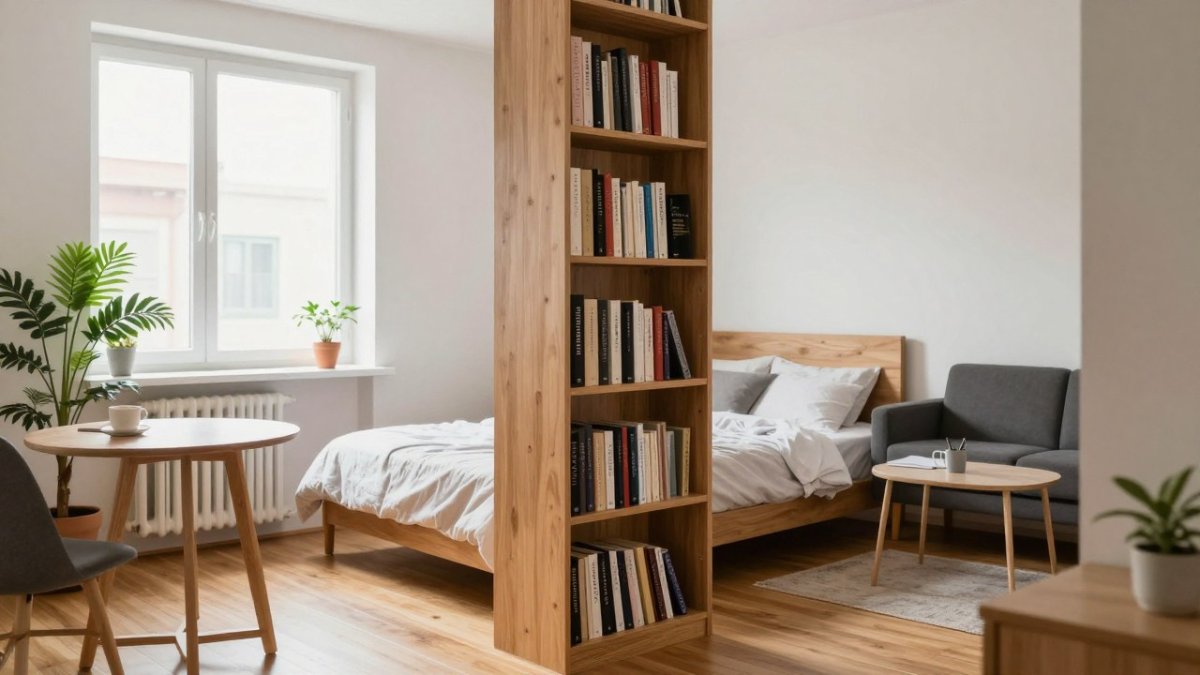
Three moves that consistently help:
- Float the furniture. Pulling the sofa away from the wall creates visual zones.
- Use vertical storage. Shelving above doorways and tall bookcases recover floor space.
- Pick multi-use pieces. An ottoman with storage or a fold-down desk saves room.
For more strategies, our team put together a guide on how to make a one-bedroom apartment feel bigger that applies to compact layouts of any kind.
Studio vs One-Bedroom for Working From Home
Remote work settles this debate faster than any other factor. A one-bedroom lets you close a door on your desk at the end of the day, which protects sleep and separates work from rest.
If you choose a studio and work from home, define a work zone that packs away. A folding desk, a laptop riser, and noise-cancelling headphones solve most of the problem.
The honest limitation: studios get distracting when a partner or roommate shares the space during your workday. Couples who both work remotely usually fare better in a one-bedroom.
Which Layout Fits Your Household, Budget, and Daily Routine?
Match the layout to your household first, then your budget. Most guides give the same broad advice; a decision framework is more useful.
1. How many people will live here?
- Living alone: a studio is often enough, especially if you travel or work outside the home.
- Couple: a one-bedroom usually wins because two people sharing one open room have no way to separate activities.
- Roommates: a one-bedroom requires a clear plan for who uses the living area and how costs split; a studio is rarely workable for two unrelated adults.
2. Do you work from home, and how often?
- Rarely or never: a studio can work if you define a work zone that packs away.
- Several days a week: a one-bedroom lets you close a door on your desk and protect sleep.
- Two remote workers: a one-bedroom is usually the minimum, and you should confirm the bedroom can hold two workstations.
3. How often do you host guests?
- Frequently: a one-bedroom keeps guests in the living area and the bedroom private.
- Occasionally: a studio works if you plan seating and a clear sightline to the sleeping area.
- Overnight guests: a one-bedroom gives them a door and a place to sleep that is not your sofa.
4. What is your monthly housing budget, including utilities and fees?
- If rent would stretch your monthly expenses, a studio frees up cash for savings and utilities.
- If you can absorb the difference without strain, the extra room pays you back in comfort and privacy.
- Compare the total monthly amount due, not just base rent, before deciding.
5. What are your non-negotiables?
- Quiet sleep: a separate room helps if light and sound carry in open layouts.
- Storage: count closets and measure bulky items before choosing a studio.
- Accessibility: tour both layouts at different times of day and check door widths, lighting, and noise from neighboring units.
A simple scoring approach: list your top five priorities, rank each layout from one to five on how well it meets them, and total the scores. The layout with the higher total is usually the better fit, even if it costs more.
Budget decides the rest. If rent stretches your monthly expenses, a studio frees up cash for savings and utilities. If you can absorb the difference without strain, the extra room pays you back in comfort.
Couples weighing floor plans together can find specific guidance in our article on how couples can choose a one-bedroom apartment floor plan, which covers how to split space and agree on priorities before signing.
Schedule a Tour at Waters Haven and See Both Floor Plans
Floor plans read very differently in person, and the best way to settle the studio-versus-one-bedroom question is to stand in both. Waters Haven offers one and two-bedroom floor plans in a community-oriented setting, with an onsite laundry facility and a pool.
To learn more about the floor plans, schedule a tour with Waters Haven.
The decision comes down to how you live, not which layout sounds better on paper.
Frequently Asked Questions
What is the difference between a studio apartment and a one-bedroom apartment?
A studio apartment is one open room that combines the living area, sleeping area, and kitchen, with a separate bathroom. A one-bedroom apartment adds a wall and door between the bedroom and the living space, giving you two distinct rooms. That single wall changes privacy, noise, storage options, and usually rent. The studio vs one-bedroom choice often comes down to whether you need separation between where you sleep and where you spend your day.
Is a studio or 1 bedroom apartment cheaper?
Studios are almost always cheaper. Studios typically cost less than one-bedrooms in the same building. You also save on utilities because there is less square footage to heat and cool. The trade-off is less space and no separate bedroom. If budget is your top priority, a studio usually wins; if you need privacy or work from home, the extra rent for a one-bedroom may be worth it.
Can two people comfortably live in a studio apartment?
Two people can share a studio, but it takes planning. You will want a clear room divider or furniture arrangement that separates the sleeping area from the living space, plus enough closet space for two people's belongings. Couples who keep similar schedules and travel light tend to adapt best. If you both work from home or host guests often, a one-bedroom gives each person more breathing room and a door to close.
How do you make a studio apartment feel like a one-bedroom?
Use a bookcase, curtain, or folding screen to create a visual wall between the sleeping area and the living space. Define zones with rugs, keep the kitchen counter clear, and choose furniture that does double duty, like a storage ottoman or a murphy bed. Mirrors and light colors make the floor space feel larger. These studio apartment layout ideas won't add a real door, but they give you the separation and routine a one-bedroom provides.
Which is better for working from home: a studio or a one-bedroom apartment?
A one-bedroom is usually better for working from home because you can close the bedroom door during calls and keep your desk away from where you sleep. In a studio, you need a dedicated corner and noise-cancelling headphones, and you may find it harder to switch off after hours. If your job is mostly independent work and you live alone, a well-planned studio can work. For video calls, two people, or frequent focus time, the separate room pays off.