 How-to
How Can You Make a One-Bedroom Apartment Feel Bigger?
Last Updated: November 13, 2026
Quick Summary
You can make a one-bedroom apartment feel bigger by clearing sightlines, choosing a few larger furniture pieces scaled to the room, and keeping 30 to 36 inch walking paths. Light wall colors, mirrors across from windows, and layered lighting add depth, while closed storage moves clutter out of sight.
- Clear all surfaces and put back only what you use weekly to keep sightlines open.
- Main walking paths should be 30 to 36 inches wide, with 36 inches for shared paths.
- Leave 14 to 18 inches between a sofa and coffee table so you can sit and stand easily.
- Keep any room divider under about 30 inches tall so light and views pass through.
- Spend on lighting and mirrors first because they change how the whole room feels.
Table of Contents
- Start With Decluttering and Clear Sightlines
- How to Make a Small Room Look Bigger With Furniture
- Small Apartment Layout Ideas That Improve Traffic Flow
- How to Make a Small Room Look Bigger With Paint
- Use Light and Mirrors to Add Depth to Your One-Bedroom Apartment
- Small-Space Storage Ideas for Every Room
- Rental-Friendly Updates and Common Mistakes to Avoid
- Tour a One-Bedroom Floor Plan at Waters Haven
- Frequently Asked Questions
Start With Decluttering and Clear Sightlines
The fastest way to make a one-bedroom apartment feel bigger costs nothing: remove what blocks the eye. Clear sightlines are the single most underrated trick in small-space design, and they work before you buy a single piece of furniture.
Visual clutter shrinks a room. Every stack of mail, every crowded shelf, every bag parked by the door adds weight. Your eye stops at each object instead of traveling to the far wall.
Start with these moves:
- Clear all surfaces, then put back only what you use weekly
- Move bags, boxes, and bins into a closet or cabinet
- Keep walkways and windows unobstructed
- Store seasonal items out of sight
Clutter can undo any floor plan. A common mistake is decluttering once and calling it done. Small spaces need a ten-minute reset every few days.
How to Make a Small Room Look Bigger With Furniture
Furniture scaled to the room is the difference between cozy and cramped. The rule most people miss: a few larger pieces make a small room look bigger than many small pieces scattered around. Small furniture creates visual noise. One sofa that fits the wall reads calmer than three chairs and two side tables. Measure your room first, then measure the furniture before you buy.
Start with the numbers that decide whether a piece actually fits. Most practitioners plan around these working clearances:
- Main walking paths: 30 to 36 inches wide; 36 inches is the comfortable target for a path two people share
- Between a sofa and a coffee table: 14 to 18 inches, enough to sit down and stand up without sidestepping
- In front of a dresser or closet: 30 inches of clear floor so drawers and doors open fully
- Around a bed: 24 inches on the sides you use to get in and out, and 36 inches at the foot if a dresser faces it
- Between a dining table edge and the wall: 36 inches so chairs pull out without trapping anyone
Measure the room's usable width and length, wall to wall minus radiators, baseboard heaters, and door swings, and write those numbers down before you shop. Then check the product dimensions, not the photos. A sofa that is 84 inches long and 38 inches deep needs a wall of at least 90 inches and a path of 30 inches in front of it to avoid choking the room.
Use this room-by-room guide:
| Room | Furniture mistake | Better choice |
|---|---|---|
| Living room | Several small chairs | One sofa scaled to the wall, 72-84 inches for most one-bedroom living areas |
| Bedroom | Oversized dresser | Tall, narrow dresser 30-36 inches wide and 48 inches tall |
| Entry | Bulky console | Slim bench 12-14 inches deep or wall hooks |
| Dining | Large table for guests | Fold-down or nesting table 30-36 inches wide |
Pick furniture with legs. When you can see floor underneath, the room feels larger. Glass and light-colored tops also keep the eye moving. A glass coffee table, for example, lets the rug and floor read continuously instead of cutting the room into blocks.
Watch out: a sofa pushed tight against a wall with no breathing room on either end can make a long wall feel shorter. Leave 6 to 12 inches at each end when the layout allows, or choose a piece that ends near a doorway rather than mid-wall.
Recommended Furniture Clearances in a Small Apartment
Small Apartment Layout Ideas That Improve Traffic Flow
Traffic flow decides whether an apartment feels open or tight. A clear path from door to window, with furniture pulled off the walls, makes even a small space feel generous. In a one-bedroom, the extra challenge is keeping the bedroom feeling separate from the living area without walling it off.
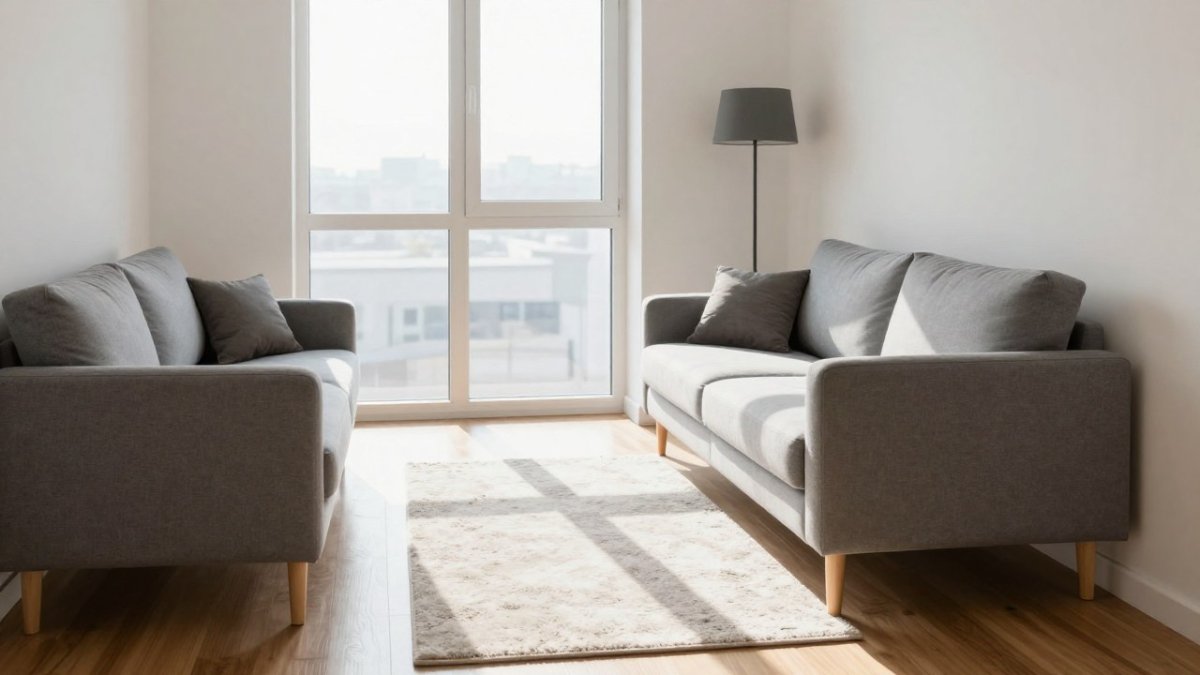
Try these layout moves:
- Float the sofa a few inches off the wall to create a walkway behind it
- Group seating around a rug to define a room zone
- Keep at least one clear path to each window
- Angle a desk or chair into a corner to free floor space
Here is a sample plan for a typical 12-by-16-foot living room in a one-bedroom. Anchor an 84-inch sofa on the longest uninterrupted wall, centered so it ends 6 to 12 inches from each corner. Place a 36-by-24-inch coffee table 16 inches in front of the sofa. Put a 30-inch-wide chair at one end, angled toward the sofa, leaving a 30-inch path from the entry door to the window. A 5-by-8-foot rug under the seating group ties the zone together and leaves visible floor around it, which reads as more space.
Room zones matter in a one-bedroom apartment. A rug under the seating area and a separate rug under the bed tell your eye where one space ends and another begins. That division makes each zone feel bigger, not smaller. If the bedroom opens directly into the living area, run a low bookcase or a console behind the sofa as a soft divider, it preserves the sightline over the top while marking the boundary. Keep the divider under about 30 inches tall so light and views still pass through.
Watch out: a divider that is too tall or too deep turns an open one-bedroom into two cramped rooms. Measure the remaining path on both sides before you commit; you still need 30 inches to walk through comfortably.
How to Make a Small Room Look Bigger With Paint
Light paint colors on the walls reflect light and push walls back. That is the whole trick behind how to make a small room look bigger with paint, and it costs far less than new furniture.
Go with soft whites, warm creams, or pale grays for the main walls. Keep the ceiling the same color or lighter. A dark ceiling drops the room and makes it feel closed in.
- Paint trim and baseboards the same color as the walls to blur the edges
- Use one bold accent wall at most, and only if you love it
- Test paint on a wall, not a swatch, before committing
- Skip heavy wallpaper on every wall; one textured wall is enough
Bold patterns can work, but use them in small doses. A patterned rug or a few pillows add interest without shrinking the room. Painting is one of the few updates that suits renters who plan to stay a while, though you should always check your lease terms first.
Use Light and Mirrors to Add Depth to Your One-Bedroom Apartment
Mirrors and layered lighting add depth faster than any other change. A floor mirror across from a window doubles the daylight and makes the far wall seem farther away.
Lighting works the same way. One overhead bulb flattens a room. Three light sources at different heights create depth.
Try this setup:
- A floor lamp in a dark corner
- A table lamp on a side table
- Wall lighting above a desk or bed
- Sheer curtains so windows stay bright but private
Keep windows unobstructed. Heavy furniture in front of glass blocks the best free light you have. The U.S. Department of Energy's guidance on daylighting explains how natural light changes how a room reads, and the same principle applies at apartment scale.
Small-Space Storage Ideas for Every Room
Storage you cannot see is storage that makes a room feel bigger. The goal is to move everyday items off surfaces and into closed cabinets, bins, and drawers.
These small-space storage ideas work in almost any layout:
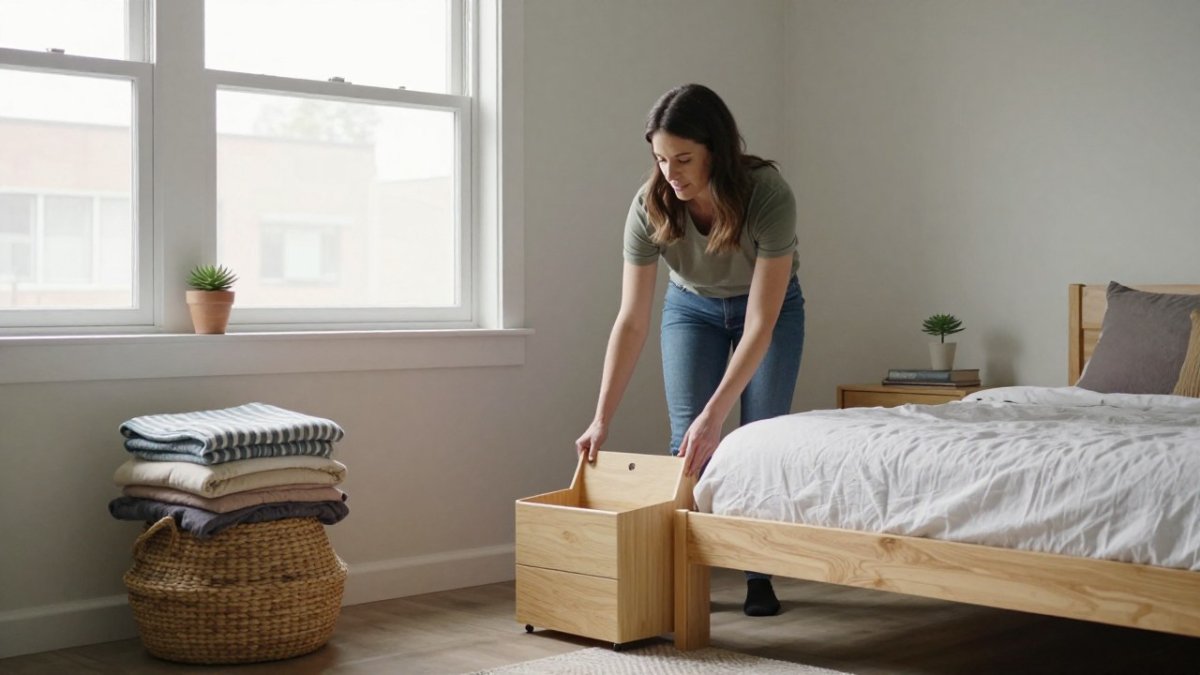
- Use bed risers and under-bed bins for off-season clothing
- Add a tall bookcase that uses wall height, not floor space
- Hang a shoe rack or hooks inside the closet door
- Choose an ottoman with hidden storage for blankets
- Put shelves above the toilet and washer
Vertical space is your best friend. A wall of shelves frees floor space and draws the eye upward, which makes the ceiling feel higher.
Rental-Friendly Updates and Common Mistakes to Avoid
Rental-friendly updates let you reshape an apartment without losing a deposit. Think removable wallpaper, tension rods, adhesive hooks, and freestanding shelving.
Budget realistically. A few hundred dollars spread across paint, a mirror, lamps, and storage bins goes a long way. Spend on lighting and mirrors first; they change how the whole room feels.
Watch out: the most popular small-space tricks backfire when overdone. Too many mirrors turn a room into a funhouse. All-white everything reads cold and flat. Tiny furniture makes a room look like a dollhouse. And heavy curtains over a small window steal the light you need.
Also check your lease before drilling or painting. Many rentals allow small nails and paint with approval, but rules vary by property.
Tour a One-Bedroom Floor Plan at Waters Haven
A well-designed floor plan can help a one-bedroom apartment feel bigger.
You can see how couples can choose a one-bedroom apartment floor plan and picture your own furniture in the space before you commit.
Our community also gives you a pool and onsite laundry. Schedule a tour and walk the floor plan yourself.
Choosing an apartment that feels spacious starts with the layout, not just the size. Waters Haven offers one and two-bedroom floor plans, a pool, and an onsite laundry facility, all in a community designed to feel like home. Get started with Waters Haven and find a one-bedroom that lives larger than its square footage.
Frequently Asked Questions
What furniture makes a one-bedroom apartment look bigger?
Choose furniture scaled to the room and lift it off the floor. A sofa with exposed legs, a glass or acrylic coffee table, and a tall bookcase draw the eye upward and let light pass underneath. Avoid oversized sectionals and heavy dark pieces that block sightlines. Measure your room first, then pick pieces that leave at least 30 inches of walking space between them. Multifunctional items like a storage ottoman or a drop-leaf table also help you get more use from the same square footage.
What paint colors make a small room look bigger?
Light colors reflect more light and make walls feel farther apart. Soft whites, pale grays, and light blues work well in small rooms. Painting the walls and ceiling the same color reduces visual breaks and makes the space feel taller. A single accent wall in a deeper shade can add depth without closing the room in. Keep bold patterns to small doses like pillows or art, since large busy patterns can make a small room feel cramped.
How can I make a one-bedroom apartment feel more spacious without renovating?
Focus on what you can change without touching the walls. Declutter surfaces, clear the path to windows, and swap heavy curtains for light ones. Add a floor mirror across from a window to bounce natural light around the room. Use vertical space with tall shelves and wall hooks. Rugs can define zones in an open living area so the space reads as intentional rather than crowded. These rental-friendly changes cost little and can be undone when you move.
How should I arrange furniture in a small apartment?
Pull furniture away from the walls and float it toward the center of the room. This creates clear sightlines and makes the space feel wider. Leave at least 30 inches for main walkways and 18 inches between a sofa and coffee table. Anchor each zone with a rug so the living area and dining area read as separate spaces. Keep windows unobstructed and place the largest piece, usually the couch, against the longest wall to balance the room.