
 How-to
How to Plan an Apartment Move in Checklist Form
Last Updated: November 17, 2026
Quick Summary
Plan your apartment move by working backward from your move-in date on a timeline that starts eight weeks out: set your budget and book movers at eight weeks, declutter and buy supplies at four weeks, then confirm logistics and pack at two weeks. Build a checklist template with timeline, budget, contacts, inventory, and inspection sections, and update it weekly.
- Give notice to your current landlord after checking your lease's required notice to vacate period.
- Sort every room into keep, donate, sell, and discard piles four weeks before the move.
- Reserve the elevator and parking spot with your new building's management two weeks out.
- Add a cushion of 10 to 15 percent of your total to your moving budget.
- Complete a photo move-in inspection on day one and submit a copy to your landlord.
Table of Contents
- Start With a Realistic Apartment Moving Timeline
- Build Your Apartment Move-In Checklist Template
- Set a Moving Budget Before You Sign Anything
- Handle Building Logistics: Elevators, Parking, and Access
- Complete Your Apartment Move-In Inspection Checklist
- What Your Apartment Move-In Checklist Landlord Needs From You
- Move-Day Logistics and Your First Night
- Schedule a Tour at Waters Haven
- Frequently Asked Questions
Start With a Realistic Apartment Moving Timeline
An apartment move goes smoothly when you work backward from your move-in date. A realistic apartment moving timeline starts eight weeks out and breaks tasks into small, weekly steps. This guide from Waters Haven walks you through each phase, from budget to first night. Below, we show you exactly how to plan an apartment move in checklist form so nothing gets missed.
A common mistake is waiting until the last two weeks. That is when movers are booked, elevators are reserved, and stress takes over. Start early and the whole apartment move feels manageable.
Here is the full timeline at a glance:
| Phase | Timing | Core Tasks |
|---|---|---|
| Plan and book | 8 weeks out | Set budget, get quotes, confirm date |
| Declutter and gather | 4 weeks out | Sort belongings, buy supplies |
| Confirm and pack | 2 weeks out | Lock logistics, pack boxes |
| Move and settle | Move day | Inspect, unpack, set up |
Eight Weeks Out: Budget and Book
Eight weeks is when you set your moving budget and book your moving company or truck. Get several moving quotes and compare them line by line. Confirm your exact move-in date with your new landlord in writing.
Also give notice to your current landlord. Check your lease for the required notice to vacate period. Notice periods vary, so read the fine print before you commit to a date. For a full rundown of tenant rights and notice rules, see HUD's tenant rights guidance.
Four Weeks Out: Declutter and Gather Supplies
Four weeks out is the time to declutter. Sort every room into keep, donate, sell, and discard piles. Fewer boxes mean lower moving costs and less to unpack later.
Then gather your packing supplies:
- Moving boxes in small, medium, and large sizes
- Packing tape and a tape dispenser
- Bubble wrap and paper for fragile items
- Labels and markers
- A moving binder for receipts and documents
Buying supplies early saves you from scrambling the night before.
Two Weeks Out: Confirm Logistics and Pack
Two weeks out, confirm every detail and start packing. Call your moving company to reconfirm the date and arrival window. Reserve the elevator and parking spot with your new building's management.
Then pack room by room, starting with items you rarely use. Label each box with the room and a short contents list. Keep a moving inventory of every box so you can track it on move day.
Build Your Apartment Move-In Checklist Template
An apartment move-in checklist template is a single document that lists every task, date, and contact for your move. Build yours in a spreadsheet or a printed binder, and keep it where you can reach it daily.
Your template should have five tabs or sections:
- Timeline: every task with a due date
- Budget: estimated and actual costs
- Contacts: landlord, movers, utilities, building manager
- Inventory: box numbers and contents
- Inspection: condition notes and photos
A moving binder keeps paper receipts and your signed lease in one place. The template is the backbone of your apartment move, so update it every week.
Set a Moving Budget Before You Sign Anything
Set your moving budget before you sign a lease or book a mover. A realistic apartment moving budget covers more than the truck.
Before the move (due at application or lease signing):
- Application fee, if charged
- Administrative or lease-prep fee, if charged
- Security deposit, as stated in your lease
- Pet deposit and monthly pet rent, if applicable
- First month's rent, and sometimes last month's rent or a prorated amount
- Renter's insurance premium, usually paid monthly or annually
- Moving company deposit or truck rental reservation hold
On move day:
- Moving company balance or truck rental plus fuel and mileage
- Packing supplies: boxes, tape, bubble wrap, labels, mattress bags
- Elevator reservation or building move-in fee, which some communities charge
- Parking or loading-zone permit, if the building or city requires one
- Food, water, and tips for movers
After you arrive:
- Utility connection or transfer fees for electricity, gas, water, and internet
- Internet installation or equipment fee
- Cleaning supplies and any professional cleaning the lease requires
- Basic furnishings or replacements for items you decluttered
- A small reserve for the first maintenance request or surprise
Two apartment-specific costs deserve their own line. First, overlapping rent: if your old lease ends after your new one begins, you may pay rent on two units in the same month, so confirm both end and start dates before you commit. Second, the deposit you are waiting to get back: your old security deposit may not arrive until weeks after move-out, so do not count on it to fund move-in costs.
Use a fill-in template so the budget stays usable. In your spreadsheet, create columns for Item, Estimated Cost, Actual Cost, Due Date, Paid (Y/N), and Notes. Group rows by the three buckets above.
Get written quotes rather than guessing. Moving and truck rental pricing depends on several factors, so ask for written quotes. Some moving expenses may be tax deductible if you relocate for work, so confirm the rules with a tax professional and check IRS guidance on moving expenses.
Watch out: skipping the cushion is the most common budget mistake. A small reserve covers a broken item, an extra moving hour, or a last-minute supply run, and it is the difference between a stressful move and a manageable one.
Handle Building Logistics: Elevators, Parking, and Access
Apartment buildings have rules that houses do not, and the rules are enforced on move day whether you read them or not.
Elevator reservations. Some buildings with a single service elevator require you to reserve a move-in window, and some limit moves to certain days or hours.
Certificate of insurance. Managed communities commonly require your mover to file a certificate of insurance naming the property or landlord as an additional insured before move day.
Parking and loading zones. Ask where the truck can park, for how long, and whether a permit or placard is required.
Move-in windows and quiet hours. Some leases set move-in hours and restrict moves on certain days.
Access route and furniture fit. Measure doorways, hallways, stairwells, and the elevator interior, not just the unit.
Ask your building manager these questions in one email so you have a written record:
- Do I need to reserve the elevator, and for what time window?
- What certificate of insurance do you require, and who must be named?
- Where can the moving truck park, for how long, and is a permit needed?
- Are there move-in hours, quiet hours, or weekend restrictions?
- Does the building require proof of renter's insurance before move-in?
- Which entrance should movers use, and is there a loading dock or service door?
If you are still choosing a community, explore apartment features that fit your move before you commit, and ask about move-in logistics on the tour, the answer tells you a lot about how the building is run.
Complete Your Apartment Move-In Inspection Checklist
An apartment move-in inspection checklist documents the condition of your unit before you move in. Complete it on day one, with photos, and submit a copy to your landlord. This protects your security deposit.
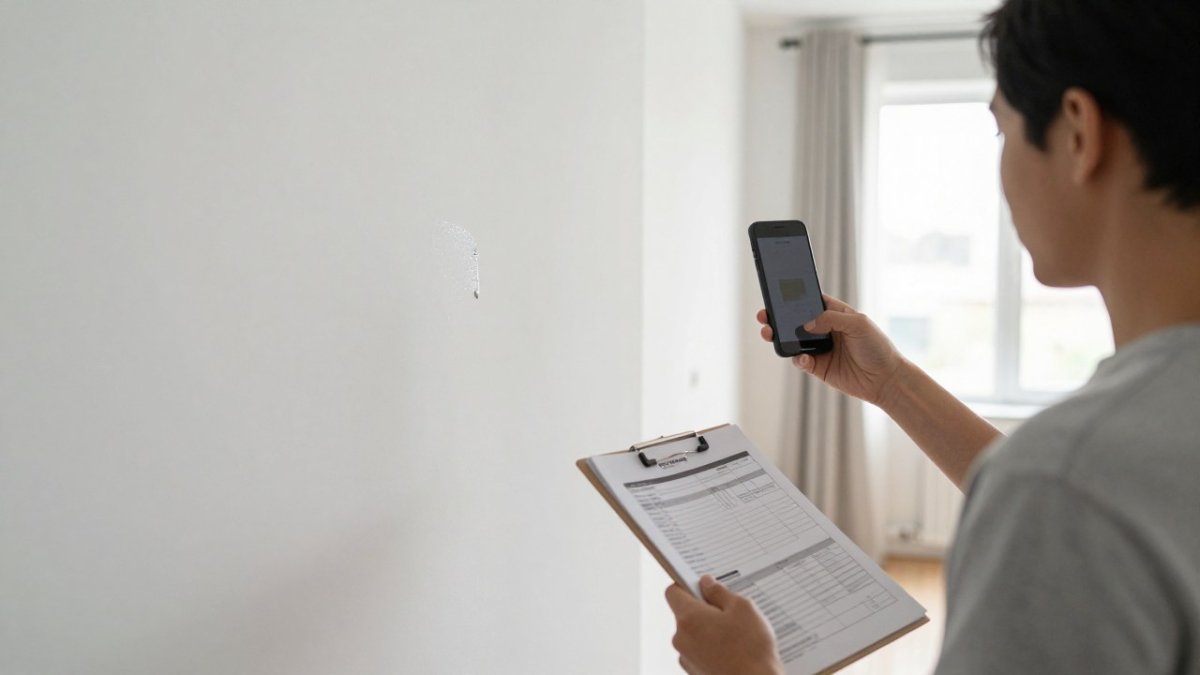
Walk every room and record:
- Wall scuffs, holes, and paint condition
- Floor stains, scratches, or loose tiles
- Appliance function: stove, fridge, dishwasher
- Water pressure and drains in each sink and shower
- Windows, locks, and screens
- Outlets, light fixtures, and smoke detectors
Photograph each issue with a date stamp. Note everything on a condition report and get your landlord's signature or written acknowledgment. This step is the strongest protection for your deposit.
What Your Apartment Move-In Checklist Landlord Needs From You
Your landlord needs a few items from you to close out the move-in. Send them promptly and keep copies in your binder. An apartment move-in checklist landlord requirements usually include proof of renter's insurance, a signed condition report, and updated contact details.
Gather these documents:
- Renter's insurance proof naming the property
- Signed lease and any addenda
- Completed condition report with photos
- Utility account confirmations
- Pet registration and any pet fees, if applicable
Renter's insurance is often required by lease and protects your belongings. Confirm coverage limits and what your policy includes before move day.
Move-Day Logistics and Your First Night
Move day runs best on a written plan. Confirm the truck arrival window, elevator reservation, and parking spot the day before. Pack a first-night box so you are not searching through boxes at midnight.
Your first-night essentials box should hold:
- Bedding and pillows
- Toiletries and towels
- Phone charger and medications
- Snacks, water, and paper plates
- A change of clothes
- Basic tools and a flashlight
After the movers leave, do a quick walk-through and note any new damage. Then set up your bed and kitchen basics first. A settled bedroom and a working kitchen make the first night feel like home.
Waters Haven offers one and two-bedroom floor plans, an onsite laundry facility, and a pool.
Schedule a Tour at Waters Haven
Planning an apartment move is easier when you know your destination. If you are still choosing a community, start with a tour so you can confirm floor plans, amenities, and move-in logistics in person. Waters Haven offers one and two-bedroom floor plans, onsite laundry, and pool access. Before you visit, prepare for your apartment tour with our step-by-step guide. Then schedule a tour, walk the unit, and ask about elevator and parking rules for your move day.
Moving does not have to feel overwhelming. With a written timeline, a solid budget, and a completed inspection, you control the process from start to finish. Waters Haven makes the last step easy with well-designed one and two-bedroom floor plans, an onsite laundry facility, and pool access for residents. Get started with Waters Haven and settle into a community that feels like home.
Frequently Asked Questions
What should be on my apartment move-in checklist?
A working apartment move-in checklist covers four areas: paperwork (signed lease, receipts, deposit record), condition (photos and a written condition report of every room), utilities (transfer dates for power, water, and internet), and essentials (toiletries, bedding, a few kitchen items for the first night). Build it as a single document or binder so nothing gets lost between the tour and the day you get keys.
How far in advance should I start planning an apartment move?
Eight weeks gives you enough runway to give notice to your current landlord, get moving quotes, and book an elevator or loading zone if your building requires it. If you are relocating for a military assignment, start as soon as orders are in hand, since peak summer months fill up faster. A shorter timeline is workable, but expect to pay more for movers and accept less choice on dates.
What should I inspect and document when I move in?
Photograph and note every pre-existing flaw: wall scuffs, carpet stains, chipped countertops, non-working outlets, and any appliance damage. Test smoke detectors, run each faucet, and check that locks work. Submit the signed condition report to your landlord within the timeframe your lease specifies, usually a few days. Keep copies of everything, since this record is what protects your security deposit at move-out.
How much money should I budget to move into an apartment?
Plan for first month's rent, a security deposit as stated in your lease, any application fees, and utility connection charges. Add moving truck rental, boxes, tape, and labels, plus a cushion for the first grocery run and any furniture you discover you need. Ask your landlord in writing about every fee before signing so the rent price you see is the amount you actually pay.